

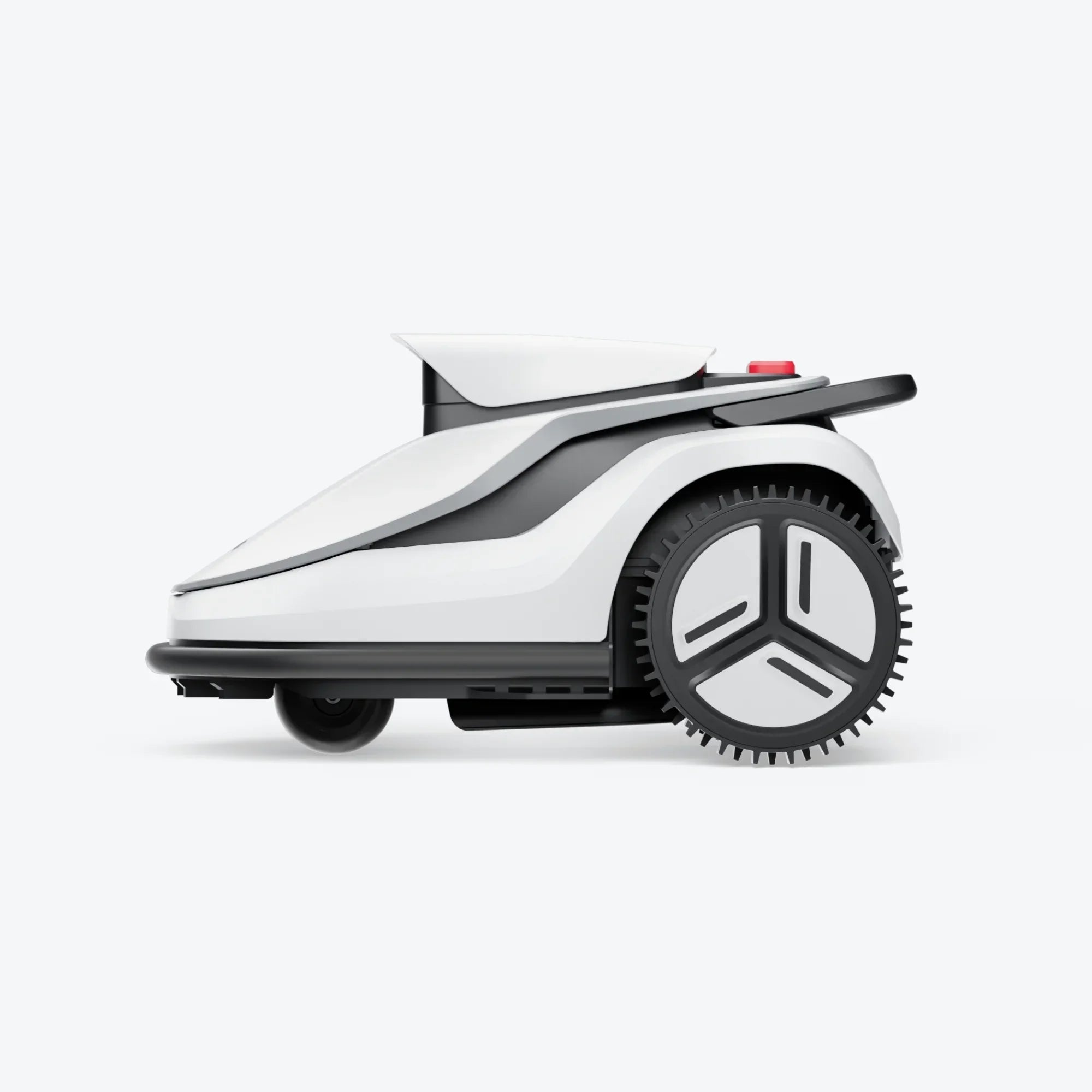


Choisir la bonne tondeuse ne se résume pas à couper l'herbe — il s'agit d'associer la technologie à votre paysage spécifique, votre mode de vie et vos objectifs d'entretien à long terme. Après des années de tests d'équipements d'entretien de pelouse et d'analyse de ce qui fonctionne réellement en conditions réelles, j'ai appris que la "meilleure" tondeuse est toujours celle qui convient à votre situation unique.

Commencez par la réalité physique de votre jardin
Avant de comparer les caractéristiques ou les prix, parcourez votre propriété avec un regard neuf. La surface de votre pelouse compte, mais son niveau de complexité aussi. Un demi-acre plat est un défi complètement différent d'un quart d'acre avec des pentes, des massifs fleuris et des passages étroits entre les zones du jardin.
Mesurez la surface totale que vous tondez, mais notez aussi les obstacles. Combien d'arbres devez-vous contourner ? Y a-t-il des changements de dénivelé qui mettraient à l'épreuve certains types de tondeuses ? Avez-vous des espaces étroits où la maniabilité devient critique ? Ces caractéristiques physiques élimineront immédiatement certaines options et en valoriseront d'autres.
Les pentes méritent une attention particulière. Si vous avez des inclinaisons supérieures à 15 degrés, cela a un impact significatif sur les équipements capables de gérer votre terrain en toute sécurité et efficacité. Les tondeuses robots varient largement en capacité de montée — certaines gèrent des pentes douces tandis que d'autres sont conçues pour des collines ardues.
Adaptez le type de tondeuse à votre niveau d'implication
Combien de temps et d'effort physique voulez-vous investir dans l'entretien de la pelouse ? Cette évaluation honnête façonne tout.
Tondeuses à pousser traditionnelles exigent votre participation directe à chaque séance. Elles sont abordables et vous donnent un contrôle total, mais demandent votre temps et votre énergie chaque semaine. Pour les petites pelouses plates de moins de 1 500 square feet, elles restent pratiques et vous gardent connecté au travail du jardin.
Tondeuses autotractées et autoportées réduisent l'effort physique tout en vous laissant aux commandes. Elles sont pertinentes pour les propriétés où vous voulez la satisfaction de tondre vous-même tout en ayant besoin d'aide pour couvrir de plus grandes surfaces ou affronter le terrain. Si vous avez un à deux acres et que vous appréciez les résultats immédiats de la tonte, elles offrent efficacité sans automatisation complète.
Tondeuses robotisées représentent un changement fondamental d'approche. Vous n'opérez pas l'équipement — vous gérez un système qui fonctionne de façon autonome. Cela séduit les propriétaires qui préfèrent passer le samedi en randonnée plutôt qu'à tondre, ou qui voyagent souvent et veulent un entretien régulier de la pelouse. L'investissement initial est plus élevé, mais vous récupérez des heures chaque semaine.
La question technologique : comment les robots tondeuses se repèrent
Si vous envisagez sérieusement d'acheter une tondeuse robotisée, comprendre la technologie de navigation est crucial car elle détermine les types de pelouses que la tondeuse peut gérer efficacement et influence fortement le prix.
Systèmes RTK-GPS utilisent le positionnement par satellite pour une navigation de précision. Ils fonctionnent bien en zones ouvertes mais peuvent avoir du mal sous un couvert d'arbres ou près de bâtiments où les signaux s'affaiblissent. Si votre propriété est fortement ombragée par des constructions ou un feuillage dense, la fiabilité du GPS devient un point d'attention. Ces systèmes nécessitent généralement l'installation d'une station de base pour un positionnement précis.
Systèmes basés sur la vision représentent une approche purement IA de la navigation. La série V de TerraМow, par exemple, utilise TerraVision™ 2.0 — un système de vision IA à triple caméra qui se repère en voyant et en interprétant l’environnement, de manière similaire au fonctionnement des véhicules autonomes. Cette approche ne dépend pas des signaux satellites, ce qui résout les problèmes des propriétés avec des obstacles bloquant le signal ou des configurations complexes. Le système utilise une imagerie haute résolution combinée à une perception 3D pour créer des cartes détaillées et reconnaître les obstacles en temps réel.
L'avantage de la navigation basée sur la vision devient clair quand on considère des jardins avec des passages étroits, des zones sous un fort couvert d'arbres ou des aménagements qui évoluent selon les saisons. Les systèmes GPS peuvent perdre en précision dans les zones ombragées, tandis que les systèmes de vision s'adaptent en voyant simplement ce qui est réellement présent. L'approche de TerraМow offre une "positionnement visuel neuronale biomimétique" — essentiellement une navigation à la manière humaine, en identifiant des repères visuels et en maintenant une conscience spatiale sans signaux externes.
Systèmes hybrides LiDAR sont apparus récemment comme des solutions haut de gamme combinant la mesure de distance par laser et la vision par caméra. Le LiDAR (Light Detection and Ranging) envoie des impulsions laser et mesure le temps de retour, créant des cartes 3D extrêmement précises des environs. Associés à une vision IA basée sur caméra, ces systèmes offrent une détection d'obstacles et une précision de navigation exceptionnelles.
Le compromis avec le LiDAR est le coût. La technologie est coûteuse à produire, et les tondeuses équipées de capteurs LiDAR affichent généralement des tarifs premium — souvent 30 à 50 % de plus que les systèmes uniquement basés sur la vision. Pour la plupart des pelouses résidentielles, la question est de savoir si la précision accrue justifie l'investissement supplémentaire. Le LiDAR excelle dans des environnements très complexes avec de nombreux petits obstacles ou dans des applications commerciales où la fiabilité maximale prime sur le coût. Cependant, pour les jardins domestiques typiques, des systèmes de vision avancés comme l'installation triple caméra de TerraМow offrent souvent une détection d'obstacles et une capacité de navigation suffisantes à un prix plus abordable.

Considérez la complexité et les limites de votre pelouse
Les pelouses rectangulaires simples sont faciles pour tout type de tondeuse. La plupart des propriétés ne sont pas aussi simples.
Si votre jardin comprend plusieurs zones séparées par des allées, des massifs qui changent selon les saisons, ou des zones où vous ajustez fréquemment ce qui doit être tondu, réfléchissez à la façon dont chaque type de tondeuse gère la complexité. Les tondeuses traditionnelles vous permettent de décider au moment même. Les systèmes robotisés gèrent automatiquement des schémas définis, s'adaptant aux obstacles et aux changements lorsqu'ils les rencontrent.
Pour les propriétés au plan particulièrement complexe — coins serrés, ornements de jardin, obstacles fréquents — la capacité de la tondeuse à détecter et éviter les objets en temps réel est déterminante. Les systèmes modernes basés sur la vision comme ceux de TerraМow peuvent identifier et contourner jouets, animaux, branches tombées et autres obstacles sans intervention manuelle, adaptant leur modèle de tonte en temps réel plutôt que de suivre des trajectoires rigides prédéfinies.
La question de la taille va au-delà de la superficie totale. TerraМow propose son modèle V600 pour des pelouses jusqu'à environ 6 000 square feet et le V1000 pour des propriétés jusqu'à 10 000 square feet. Mais il ne s'agit pas seulement de couverture — il s'agit de savoir si la tondeuse peut réellement naviguer efficacement sur votre terrain spécifique. Une tondeuse compacte et agile peut emprunter des passages étroits et atteindre des espaces que des modèles plus grands ne peuvent tout simplement pas accéder.

Conditions environnementales et type d'herbe
Votre climat local et les espèces de gazon influent sur les tondeuses qui fonctionneront de manière optimale. Les tondeuses robotisées excellent pour des tontes fréquentes et légères, ce qui maintient la plupart des types d'herbe en bonne santé et denses. Toutefois, si vous êtes dans une zone avec des saisons de croissance rapides suivies d'une dormance, vous aurez besoin d'un équipement capable de gérer ces deux situations.
Les appareils alimentés par batterie ont beaucoup progressé, mais les températures extrêmes affectent toujours les performances. Si vous êtes dans une région aux hivers rigoureux ou aux étés intenses, considérez comment la tondeuse se stocke et fonctionne dans ces conditions. Certaines tondeuses robotisées tolèrent la pluie et continuent de fonctionner sur sol humide, tandis que d'autres attendent que la pelouse sèche.
Les variétés d'herbe denses et épaisses comme le Zoysia ou certaines Bermudas demandent plus de puissance de coupe que des fétuques fines. Assurez-vous que la tondeuse envisagée dispose de la robustesse de lame et de la capacité moteur adaptées à votre type d'herbe.
Réalité de l'installation : mise en place et configuration initiale
Soyez réaliste quant aux exigences d'installation. Les tondeuses traditionnelles fonctionnent immédiatement. Les systèmes robotisés nécessitent une configuration initiale, et la facilité de ce processus varie énormément selon la technologie.
Les systèmes RTK-GPS nécessitent l'installation d'une station de base et demandent souvent un temps d'étalonnage pour établir un positionnement précis. Vous devrez trouver un emplacement optimal pour la station de base avec une bonne visibilité du ciel et vous assurer qu'elle est correctement configurée avant que la tondeuse puisse fonctionner efficacement.
Les systèmes basés sur la vision comme la série V de TerraМow ont nettement simplifié ce processus. La tondeuse effectue une cartographie automatique en explorant votre pelouse de façon autonome, construisant une image détaillée de votre propriété sans définition manuelle des limites. Pour quelqu'un qui veut la commodité d'un robot sans passer du temps à installer une infrastructure, cela compte beaucoup.
La possibilité de démarrer la tonte sans station de charge est une autre considération pratique. Certaines tondeuses robotisées doivent revenir à une base fixe, ce qui implique de la localiser et de l'installer de façon optimale. La série V de TerraМow peut fonctionner sans station permanente, vous offrant une flexibilité dans le déploiement de la tondeuse — particulièrement utile si vous testez l'emplacement ou si la configuration de votre propriété ne permet pas d'installer facilement une station fixe.

Coupe des bordures et qualité de finition
Les tondeuses robotisées peinaient historiquement à traiter les bordures, laissant des bandes non coupées le long des limites qui exigeaient une finition manuelle. Cela s'est nettement amélioré avec les systèmes de navigation modernes.
Recherchez les spécifications concernant la capacité de coupe des bords. À quelle distance la tondeuse coupe-t-elle des limites, clôtures et massifs ? Les modèles avancés offrent désormais une coupe bord à bord qui minimise ou élimine le besoin de retouches. Si votre objectif est de réduire le temps total d'entretien de la pelouse, une tondeuse qui gère bien les bordures dès le départ vous évitera de sortir la débroussailleuse chaque semaine.
Les systèmes basés sur la vision ont un avantage ici parce qu'ils peuvent réellement voir la limite plutôt que de se fier à des coordonnées préprogrammées. Cela leur permet de s'adapter aux bordures irrégulières et de couper plus près des obstacles en toute confiance.

Pensez à l'entretien et au support à long terme
Toute tondeuse nécessite un entretien, mais le type et la fréquence varient fortement. Les tondeuses traditionnelles demandent un affûtage régulier des lames, des vidanges d'huile et des révisions saisonnières. Les tondeuses robotisées nécessitent des remplacements de lames et des mises à jour occasionnelles, mais éliminent la plupart des tâches d'entretien hebdomadaires.
Renseignez-vous sur l'infrastructure de support de l'entreprise. Pouvez-vous obtenir facilement des pièces de rechange ? Y a-t-il un service local disponible, ou tout doit-il être renvoyé vers une installation centrale ? Pour les systèmes robotisés en particulier, les mises à jour logicielles et le support technique font partie de l'expérience de possession. Les entreprises qui améliorent activement leurs produits via des mises à jour firmware — ajoutant de nouvelles fonctionnalités ou améliorant les algorithmes de navigation — offrent une meilleure valeur à long terme.
Avec les systèmes IA basés sur la vision, les améliorations logicielles peuvent réellement améliorer les performances après l'achat. À mesure que les algorithmes s'améliorent pour la reconnaissance d'obstacles ou la planification de trajectoire, votre tondeuse existante en bénéficie via des mises à jour. Cela diffère des tondeuses mécaniques dont les performances sont essentiellement figées à l'achat.
Les systèmes LiDAR, bien que mécaniquement robustes, présentent une considération d'entretien supplémentaire : les capteurs laser doivent rester propres et non obstrués pour fonctionner correctement. Dans des environnements poussiéreux ou à forte présence de pollen, cela peut nécessiter un nettoyage plus fréquent que pour les systèmes à base de caméra.
Calculez le coût réel de possession
Le prix d'achat n'est que le point de départ. Prenez en compte les coûts récurrents sur cinq ans : lames de rechange, batteries, interventions de service et votre temps.
Une tondeuse à pousser à 300 $ peut sembler économique, mais si vous passez 90 minutes par semaine à tondre pendant 30 semaines par an, cela fait 45 heures par an. Sur cinq ans, vous investirez 225 heures. Quelle est la valeur de ce temps pour vous ?
Une tondeuse robotisée élimine la plupart de ces heures mais ajoute des coûts d'électricité et des services occasionnels. La fourchette d'investissement varie considérablement selon la technologie de navigation :
· Systèmes RTK-GPS se situent généralement du milieu de gamme au haut de gamme, selon la sophistication du positionnement et les fonctionnalités supplémentaires.
· Systèmes basés sur la vision comme la série V de TerraМow se situent dans une gamme moyenne à premium, reflétant le traitement IA avancé et la technologie des caméras.
· Systèmes hybrides LiDAR affichent des tarifs premium, représentant souvent l'option la plus coûteuse du marché résidentiel en raison du prix élevé des capteurs.
Faites les comptes en fonction de votre situation réelle, y compris la valeur de votre temps et toute limitation physique qui rend la tonte traditionnelle difficile. Réfléchissez à savoir si le coût supplémentaire du LiDAR apportera des bénéfices significatifs pour votre propriété spécifique, ou si un système de vision bien conçu offre des capacités suffisantes à un meilleur rapport qualité-prix.
Prendre la décision
Commencez par éliminer les options qui ne conviennent clairement pas aux contraintes physiques de votre propriété. Ensuite, considérez honnêtement votre mode de vie. Si vous appréciez vraiment l'aspect méditatif de la tonte et que vous avez le temps, une approche traditionnelle peut vous satisfaire. Si l'entretien de la pelouse est une corvée que vous aimeriez confier à la technologie, les systèmes robotisés apportent une liberté remarquable.

Pour les tondeuses robotisées en particulier, adaptez la technologie de navigation aux défis et au budget de votre propriété :
· Systèmes RTK-GPS conviennent aux propriétés ouvertes avec une bonne visibilité du ciel et peu d'obstructions aériennes, où les signaux satellites restent forts et fiables.
· Systèmes basés sur la vision excellent pour les jardins complexes avec obstacles, zones ombragées, passages étroits ou plans qui évoluent dans le temps. Ils offrent une navigation sophistiquée sans dépendre de signaux externes et, en général, à un prix plus accessible que les alternatives LiDAR.
· Systèmes hybrides LiDAR fournissent une précision maximale et une capacité de détection d'obstacles supérieure, mais à un coût nettement plus élevé. Envisagez-les si vous avez une propriété exceptionnellement complexe, de nombreux petits obstacles nécessitant une détection précise, ou si le budget passe après la recherche de la technologie la plus avancée disponible.
La tondeuse la mieux adaptée n'est pas forcément la plus avancée ni la moins chère — c'est celle qui s'aligne avec les besoins de votre jardin, le temps dont vous disposez et la façon dont vous voulez réellement interagir avec votre espace extérieur. Une tondeuse qui gère vos défis de terrain spécifiques sans nécessiter d'intervention ou d'ajustement constants donnera de meilleurs résultats qu'une machine aux spécifications impressionnantes qui ne correspondent pas à votre réalité.
Autant que possible, voyez différents types de tondeuses fonctionner dans des conditions similaires aux vôtres. Pour les tondeuses robotisées, observez particulièrement comment elles gèrent les obstacles et les défis d'aménagement propres à votre propriété. Le bon choix devient évident lorsque vous associez la technologie à la réalité plutôt que de courir après des fonctions que vous n'utiliserez peut-être jamais.
Que vous optiez pour la fiabilité éprouvée de la navigation par vision comme le système TerraVision™ 2.0 de TerraМow, ou que vous investissiez dans la précision haut de gamme de la technologie LiDAR, concentrez-vous sur ce qui améliore réellement votre expérience d’entretien de pelouse plutôt que sur ce qui paraît le plus impressionnant sur une fiche technique.
Biographie de l'auteur
Jason Keeley est le fondateur et propriétaire de Mowing Magic, une ressource en ligne de confiance dédiée à l'entretien des pelouses, la technologie paysagère et les solutions de tonte robotisée. Il combine l'expérience du terrain et des recherches approfondies pour décomposer des sujets complexes d'équipement de pelouse en conseils clairs et exploitables.


